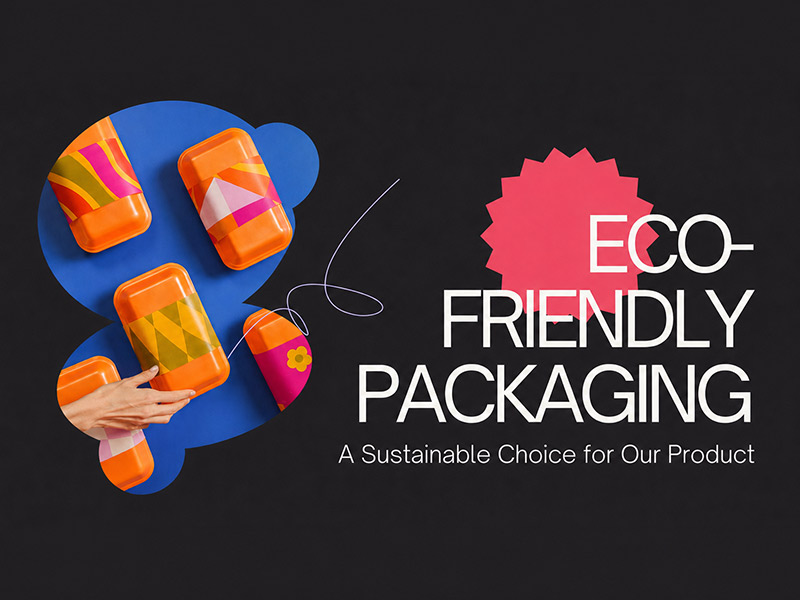
Sustainable cosmetic packaging is no longer only a marketing trend. It has become an important purchasing consideration for beauty brands, contract manufacturers, importers, and packaging wholesalers.
Consumers are paying more attention to packaging waste, while brands are working to reduce virgin plastic, improve recyclability, and introduce refill systems. Regulations in major markets are also placing greater emphasis on packaging minimization, material transparency, recycling, and producer responsibility.
However, there is no single packaging solution that is automatically sustainable for every cosmetic product. Mono-material, PCR, refillable, and lightweight packaging each address different environmental objectives.
The right choice depends on the formula, product positioning, dispensing requirements, target market, decoration, supply chain, and local recycling infrastructure. This guide compares the main options and provides a practical checklist for cosmetic packaging buyers.
1. Understanding the Main Sustainable Packaging Options
Mono-material cosmetic packaging is designed mainly from one type of material, such as PP or HDPE. For example, a mono PP airless bottle may use PP for the bottle, cap, piston, base, and most pump components.
The objective is to reduce the number of materials that need to be separated during recycling. This can make the complete package more compatible with an established recycling stream.
PCR stands for post-consumer recycled material. PCR resin is produced from plastic products that have been collected, sorted, cleaned, and reprocessed after consumer use. It can reduce the demand for virgin plastic without completely changing the original packaging format.
Refillable packaging normally consists of a durable outer container and a replaceable inner component. The consumer keeps the outer package and purchases a new refill after using the original formula.
Lightweight packaging reduces the total amount of material used in each unit. This may involve reducing wall thickness, simplifying components, or optimizing the overall package size.
| Packaging solution | Main objective | Common applications | Main consideration |
|---|---|---|---|
| Mono-material packaging | Simplify material composition | Airless bottles, jars, tubes and sticks | The complete package must still be assessed |
| PCR packaging | Reduce virgin plastic use | PET, PP and HDPE bottles or jars | Color and appearance may vary |
| Refillable packaging | Reuse the durable outer package | Premium jars, airless bottles and sticks | Refills must be convenient and available |
| Lightweight packaging | Reduce material per unit | Bottles, jars, caps and closures | Performance must not be weakened |
These solutions can sometimes be combined. A refillable cosmetic jar may use a mono-material PP refill, while a lotion bottle may contain a specified percentage of PCR resin.
2. Comparing Mono-Material, PCR, and Refillable Packaging
Mono-material packaging is often suitable for brands that want to improve material compatibility without changing how consumers use the product. It can be applied to familiar formats such as airless bottles, cosmetic jars, tubes, and stick packaging.
However, “mono-material” does not automatically mean recyclable in every country. Labels, adhesives, inks, coatings, pumps, liners, colorants, and local collection systems must also be considered.
PCR packaging is a practical choice when a brand wants to reduce virgin plastic use while maintaining an existing bottle or jar design. Depending on the resin, packaging structure, and visual requirements, PCR may be used at different percentages.
PCR resin can produce slight variations in color, transparency, odor, or surface appearance. Buyers should approve physical samples instead of relying only on digital renderings or Pantone references.
Refillable cosmetic packaging can create a premium user experience and encourage repeat purchases. It is particularly suitable for established skincare ranges because consumers can retain the decorative outer package and replace only the inner refill.
However, the environmental value of a refillable system depends on actual reuse. If the refill is difficult to install, unavailable in the target market, or packaged with excessive secondary materials, the system may not achieve its intended benefit.
| Selection factor | Mono-material | PCR | Refillable |
|---|---|---|---|
| Reduces virgin plastic | Sometimes | Yes | Over repeated uses |
| Supports simplified material design | Yes | Not necessarily | Depends on structure |
| Changes consumer behavior | No | No | Yes |
| Visual consistency | Usually high | May vary | Usually high |
| Development complexity | Low to medium | Medium | Medium to high |
| Suitable for premium positioning | Yes | Yes | Particularly suitable |
| Requires a refill sales system | No | No | Yes |
The best option should be selected according to the complete product rather than one environmental claim.
3. Match the Solution to the Formula and Product Positioning
Sustainability should never come at the expense of product protection. Packaging that leaks, breaks, reacts with the formula, or leaves excessive product inside is not an effective solution.
For airless skincare products, a mono PP airless bottle may provide controlled dispensing and a simplified material structure. For a shampoo or body lotion, an HDPE or PET bottle with PCR content may offer a more practical balance between performance, cost, and sustainability.
A refillable jar may be appropriate for a premium facial cream, but it may be unnecessarily complex for a low-cost travel product.
Use the following guide as a starting point:
| Product type | Possible packaging direction | Why it may be suitable |
|---|---|---|
| Facial serum | Mono-material airless bottle | Controlled dosage and reduced material complexity |
| Face cream | Refillable jar or airless jar | Premium positioning and repeat-purchase potential |
| Body lotion | PCR HDPE or PET pump bottle | Suitable for larger capacities |
| Shampoo and conditioner | Lightweight HDPE bottle | Durable and suitable for high-volume production |
| Sunscreen | Mono-material airless bottle, tube or tottle | Selection can be matched to formula viscosity |
| Deodorant | Refillable or mono-material stick | Supports reuse or simplified material design |
| Travel skincare | Lightweight mini packaging | Reduces size and material use |
The buyer should also consider the target retail price. A refillable system may support a premium product, while lightweight or PCR packaging may be more suitable for larger wholesale programs.
4. Consider How Decoration Affects Sustainability
Decoration is essential for cosmetic branding, but it can affect the environmental performance of the complete package.
Heavy metallization, mixed-material accessories, full-body sleeves, large labels, and certain coatings can create challenges during sorting and recycling. This does not mean that decoration must be removed. It means that appearance and sustainability should be developed together.
More practical decoration options may include:
- Direct screen printing
- Limited-area hot stamping
- Reduced ink coverage
- Compatible labels and adhesives
- Molded or embossed logos
- Natural or light-colored plastic
- Easy-to-separate decorative components
- Matte finishes created through the mold surface
Buyers should ask the packaging supplier how a decoration process changes the material structure. For example, a mono-material bottle with a large incompatible sleeve may no longer achieve the same design objective as an undecorated version.
Environmental claims should also be specific and supportable. Avoid broad statements such as “zero waste,” “completely green,” or “100% recyclable” without evidence.
More accurate claims may include:
- Made with 30% post-consumer recycled plastic
- Refillable packaging system
- Mono PP construction
- Designed with reduced packaging weight
- Outer jar designed for repeated use
5. Sustainable Cosmetic Packaging Buyer Checklist
Before requesting samples, prepare the following information.
Product and Formula
- Product application
- Formula type
- Approximate viscosity
- Required barrier performance
- Sensitivity to light, air, or moisture
- Required dispensing output
Packaging Requirements
- Required capacity
- Preferred packaging format
- Mono-material, PCR, refillable, or lightweight objective
- Preferred material
- Transparent, translucent, or solid-color appearance
- Pump, sprayer, cap, or closure type
Market and Sustainability
- Countries where the product will be sold
- Required recycled-content documentation
- Local recycling considerations
- Sustainability claims planned for the product
- Secondary packaging requirements
- Consumer disposal or refill instructions
Commercial Information
- Estimated order quantity
- Target unit price
- Required sample date
- Planned launch date
- Decoration requirements
- Testing and inspection requirements
After samples are received, test them with the actual formula. Compatibility, leakage, dispensing, transportation, temperature, decoration adhesion, and product evacuation should be evaluated before mass production.
Conclusion
Mono-material, PCR, refillable, and lightweight cosmetic packaging provide different routes toward more responsible packaging development.
Mono-material structures can simplify material composition. PCR can reduce the use of virgin plastic. Refillable systems can reduce repeated production of the outer package, while lightweight packaging can reduce the amount of material used in each unit.
The best choice depends on the complete product. Formula compatibility, dispensing performance, decoration, cost, market requirements, consumer behavior, and recycling infrastructure must be evaluated together.
For overseas buyers and wholesalers, the most effective starting point is a clear packaging brief. Once the target market, formula, capacity, quantity, and sustainability objective are confirmed, the packaging supplier can recommend suitable structures and prepare samples for testing.