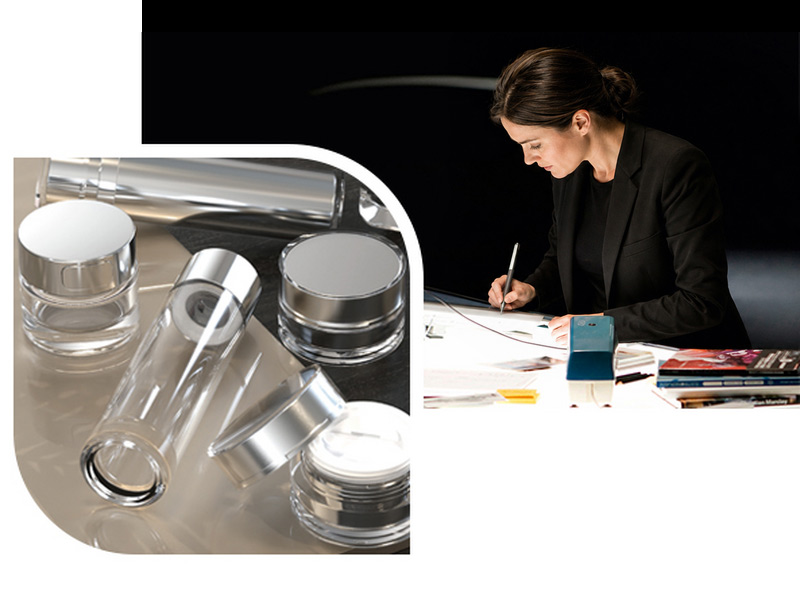
Custom cosmetic packaging development involves more than selecting a bottle and adding a logo. A successful project must connect the formula, packaging structure, brand identity, production process, quality standard, budget, and launch schedule.
For overseas buyers and wholesalers, unclear specifications are a common cause of delays. If the material, capacity, dispensing system, color, decoration, or testing requirements are not confirmed early, changes may be required after samples have already been produced.
A structured development process improves communication and reduces risk. Whether a project uses existing packaging or requires a custom mold, the following steps can help buyers move efficiently from concept to mass production.
1. Prepare a Complete Packaging Project Brief
Every project should begin with a clear packaging brief. The supplier needs to understand what the package will contain, how consumers will use it, and where it will be sold.
A request such as “We need a premium skincare bottle” is too general. A more useful description would be: “We need a 50 ml airless bottle for a medium-viscosity facial lotion, intended for the European market, with a mono-material preference and matte decoration.”
Use this checklist to prepare the project brief:
Product Information
- Product category
- Formula type
- Approximate viscosity
- Fill capacity
- Target dosage
- Sensitivity to air, light, or moisture
Market Information
- Target countries
- Target consumers
- Expected retail price
- Sales channel
- Brand positioning
- Sustainability requirements
Commercial Information
- Estimated order quantity
- Target packaging price
- Required sample date
- Planned launch date
- Shipping destination
- Expected annual demand
The buyer should also rank the project priorities. Premium appearance, recyclability, formula protection, accurate dosage, travel convenience, low weight, and cost control may involve trade-offs.
2. Select the Structure, Material, and Dispensing System
After defining the project, the next step is to select the main packaging structure.
Common cosmetic packaging materials include PP, PET, PETG, HDPE, glass, aluminum, and acrylic. Each material provides different appearance, production, decoration, and performance characteristics.
| Material | Typical appearance | Common applications | Key consideration |
|---|---|---|---|
| PP | Natural, translucent or solid color | Airless bottles, jars, caps and pumps | Suitable for many molded components |
| PET | Clear, colored or frosted | Lotion, spray and personal care bottles | Good transparency |
| PETG | High clarity and thick-wall appearance | Premium skincare bottles and jars | Higher material cost |
| HDPE | Natural milky white or solid color | Lotion, shampoo and treatment bottles | Tough and chemically resistant |
| Glass | Clear, colored or frosted | Serum, cream and fragrance packaging | Heavy and breakable |
| Acrylic | Clear, thick-wall premium appearance | Decorative outer jars and bottles | Often combined with other materials |
The dispensing system must also match the formula.
| Formula or product | Possible dispensing system |
|---|---|
| Facial serum | Airless pump, treatment pump or dropper |
| Facial lotion | Airless pump or lotion pump |
| Body lotion | Lotion pump |
| Toner | Fine mist sprayer or treatment pump |
| Face cream | Cosmetic jar or airless jar |
| Shampoo | Lotion pump, disc-top or flip-top cap |
| Sunscreen | Airless bottle, tube, tottle or stick |
| Deodorant | Stick mechanism or roll-on package |
| Perfume | Crimp or screw fragrance sprayer |
Capacity, pump output, neck size, closure type, and filling process should be discussed together.
3. Decide Between Existing Packaging and Custom Molding
Not every project requires a new mold. Existing packaging can often be customized through color, printing, coating, and different component combinations.
| Development route | Advantages | Limitations | Best suited for |
|---|---|---|---|
| Existing packaging | Faster, lower cost and lower risk | Shape may not be exclusive | Start-ups, wholesalers and short schedules |
| Semi-custom packaging | More differentiation with moderate investment | Some standard components remain | Growing brands |
| Fully custom mold | Exclusive structure and appearance | Higher cost and longer development | Large-volume, long-term projects |
An existing mold is usually the fastest option. It allows the buyer to review physical samples early and work with an established production process.
A semi-custom project may use an existing bottle with a newly developed cap, shoulder, actuator, or decorative outer component.
A fully custom mold may be appropriate when the brand needs a proprietary shape, unusual dimensions, an exclusive dispensing structure, or strong visual differentiation.
Before starting a custom mold, confirm:
- Mold development fee
- Mold ownership
- Exclusivity agreement
- Estimated development schedule
- Expected mold life
- Maintenance responsibility
- Trial-mold process
- Modification allowance
- Final approval standard
- Minimum production quantity
Custom molding should begin only after the packaging concept and commercial expectations have been reviewed carefully.
4. Develop Color, Decoration, and Artwork
Once the packaging structure is selected, visual customization can begin.
Common decoration processes include screen printing, hot stamping, UV printing, spray coating, metallization, labeling, frosting, soft-touch coating, embossing, and debossing.
| Decoration process | Visual effect | Suitable use | Important consideration |
|---|---|---|---|
| Screen printing | Clean, direct printing | Logos and product information | Limited by print area and curvature |
| Hot stamping | Metallic premium finish | Logos and decorative details | Avoid excessively fine areas |
| Spray coating | Matte, glossy or gradient color | Premium bottles and jars | Color tolerance must be approved |
| Metallization | Reflective metallic appearance | Caps and decorative components | May affect material separation |
| Labeling | Flexible graphics and information | Multiple product variations | Label and adhesive compatibility |
| Embossing | Molded raised detail | Permanent branding | Usually requires tooling |
Pantone references help communicate the desired color, but the final result depends on the material, wall thickness, surface finish, and lighting.
The same color can look different on PP, PET, glass, and metal. Buyers should therefore approve physical color samples.
Artwork must be checked against the actual printable area. Text placed close to a curved edge, shoulder, base, or component joint may become distorted.
Artwork Approval Checklist
- Correct logo file
- Correct spelling and product information
- Confirmed print colors
- Confirmed print position
- Minimum text size reviewed
- Barcode size and readability checked
- Decoration process confirmed
- Final artwork version number recorded
5. Approve Samples and Complete Testing
Sampling may include several stages.
A standard sample confirms the basic structure, dimensions, pump function, and appearance. A color sample confirms the resin or coating color. A decorated sample shows the logo and finishing. A functional sample is tested with the actual formula.
| Sample stage | Main purpose |
|---|---|
| Standard sample | Review structure, size and basic function |
| Color sample | Approve resin color, coating and tolerance |
| Decoration sample | Approve logo, printing and finishing |
| Functional sample | Test with the actual formula |
| Golden sample | Establish the final mass-production standard |
Before approval, complete a suitable testing program.
Performance Testing Checklist
- Formula compatibility
- Leakage and sealing
- Pump priming
- Output per stroke
- Product evacuation
- Repeated dispensing
- Drop resistance
- Transportation simulation
- High-temperature stability
- Low-temperature stability
- Decoration adhesion
- Component assembly
- Cap or locking function
- Refill replacement, if applicable
The packaging supplier can evaluate component and dispensing performance, while the formula owner or filling company should confirm long-term compatibility with the cosmetic formula.
6. Confirm Production, Quality Control, and Shipping
Before mass production, all approved specifications should be documented.
Pre-Production Checklist
- Product code
- Material of every component
- Capacity and dimensions
- Color reference and tolerance
- Neck and closure specification
- Pump output
- Dip-tube length
- Decoration process
- Approved artwork version
- Golden sample
- Order quantity
- Inspection standard
- Packing method
- Delivery schedule
Quality inspection may cover appearance, dimensions, function, leakage, assembly, printing, color, cleanliness, and packaging.
| Inspection area | Example checks |
|---|---|
| Appearance | Scratches, contamination, deformation and color |
| Dimensions | Height, diameter, neck and component fit |
| Function | Pumping, spraying, opening, locking and refilling |
| Sealing | Leakage in upright, side and inverted positions |
| Decoration | Position, adhesion, clarity and color |
| Packing | Quantity, protection, carton strength and labels |
Shipping packaging should protect products during long-distance transportation. Pumps, coated bottles, and decorative components may require individual bags, trays, separators, or customized cartons.
The production schedule should include molding, color preparation, decoration, assembly, inspection, packing, and export arrangements.
Conclusion
Custom cosmetic packaging development is most successful when the project follows a clear process: define the requirements, select the structure, confirm the material and dispensing system, develop the decoration, test samples, approve standards, and begin mass production.
For overseas buyers and wholesalers, detailed communication at the beginning can prevent costly changes later. Formula information, capacity, target market, pump output, decoration, quantity, and delivery date should be shared as early as possible.
Existing packaging provides a faster and more economical route, while custom molding can create stronger differentiation for long-term projects. In both cases, physical samples, written specifications, and formula testing are essential.
A reliable cosmetic packaging supplier should do more than provide a quotation. The supplier should help evaluate the structure, identify risks, coordinate samples, confirm production standards, and maintain consistent quality throughout mass production.